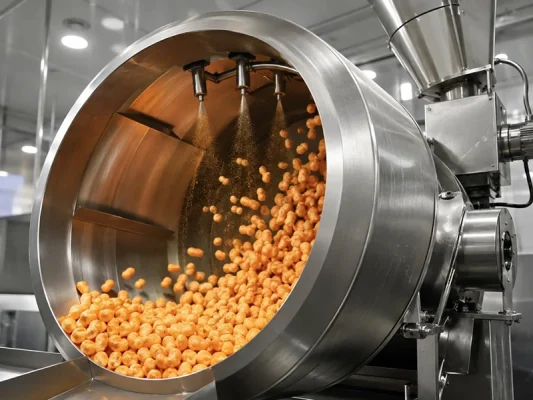
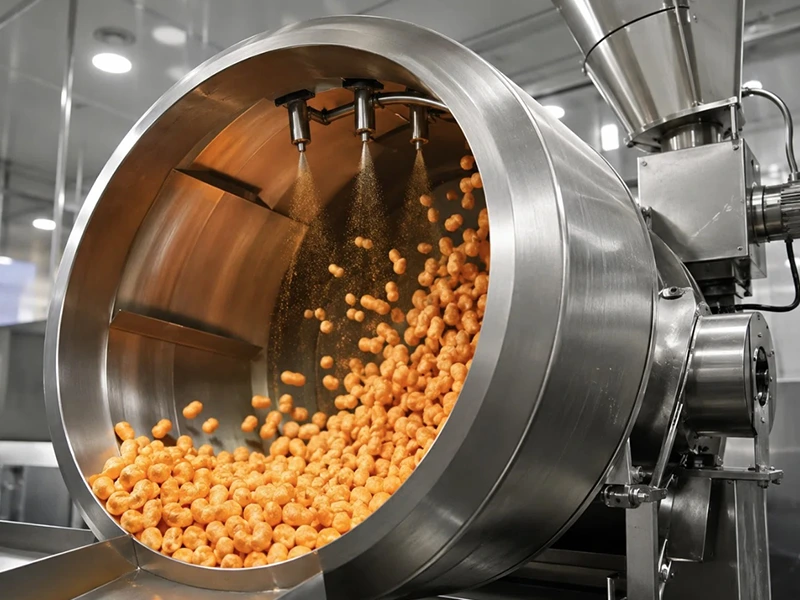
The success and market acceptance of a snack product depend on several factors, one of the most important being its flavor system, also known as snack seasoning.
Purchasing snack seasoning for a product means making a decision that can shape the consumer experience. Whether you are an R&D professional or a snack brand owner, you are choosing to introduce a new taste experience to consumers or evoke pleasant memories through familiar and nostalgic flavors.
For this reason, selecting and purchasing snack seasoning is a critical process for snack manufacturers. It has a significant impact on attracting consumers, gaining market share, and encouraging repeat purchases.
Buying Snack Seasoning for Different Types of Snack Products
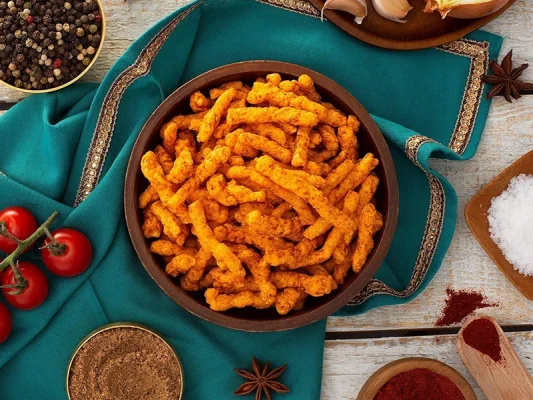
Snack seasoning gives every snack its distinctive identity. Potato chips without seasoning can taste bland. Unflavored popcorn may seem unappealing, and even delicious French fries can feel incomplete without the right seasoning. It is the seasoning that makes snacks so flavorful and appealing that consumers are motivated to buy them again and again.
Whether it is spicy Masala chips, cheese-flavored popcorn, lemon-seasoned French fries, or classic salted snacks, the final flavor experience depends on purchasing a seasoning powder that has been carefully formulated to match the product base.
Successful snack brands have one important thing in common: a strong R&D team. Such teams have the experience and technical expertise to evaluate flavor, aroma, texture, and coating performance. They understand market trends and rely on an experienced seasoning manufacturer with access to a wide range of raw materials and valuable market insights when purchasing snack seasoning in bulk.
What Are the Key Requirements for Buying Powdered Snack Seasoning?
For snack products, an effective seasoning system must offer more than just visual appeal on the product surface. A suitable snack seasoning or flavoring system should meet the following requirements:
- Deliver the desired flavor impact.
- Create an attractive and appetizing appearance.
- Be compatible with the product base.
- Maintain its performance throughout processing and packaging.
- Meet current consumer taste preferences.
Snack seasoning manufacturers typically develop their formulations around key performance objectives, including flavor retention, clean flavor release, balanced taste profiles, improved visual appeal, and support for both savory and sweet snack concepts.
Rather than relying solely on ready-made products or standard catalogs, seasoning formulations are developed according to customer requirements and specific project needs.
For snack applications, this approach allows the seasoning system to be tailored to the product base, processing conditions, desired flavor profile, and brand positioning, instead of forcing the product to fit a standard formulation.
Buying Snack Seasoning in Bulk: A Key to Consistent Product Quality
Once a snack seasoning formulation has been approved and validated on the product base, purchasing that specific formulation in bulk is a practical way to maintain product consistency.
This approach helps minimize variations caused by differences in raw materials used in subsequent production batches. As a result, manufacturers can maintain a more consistent flavor profile and ensure that their snack products deliver the same sensory experience over an extended period.
For example, Saziba, as a snack seasoning supplier, supports snack manufacturers from the earliest stages of developing a new snack flavor.
In addition to providing access to a team of experienced and trusted seasoning specialists, Saziba assists manufacturers in defining technical specifications and obtaining the necessary certifications to meet their production requirements.
With Saziba’s expertise and technical support, snack manufacturers can confidently move through every stage, from selecting the right seasoning formulation to purchasing snack seasoning in bulk.
What Are the Key Characteristics of a Professional Snack Seasoning Manufacturer?
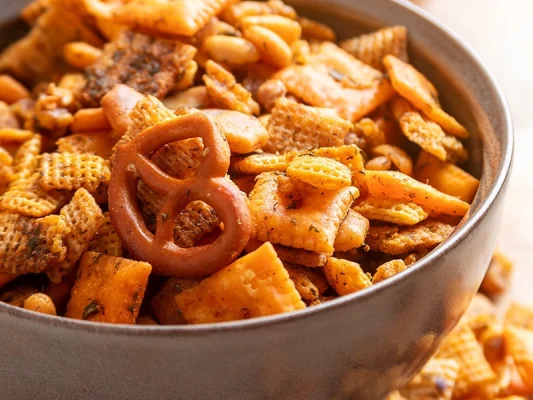
A professional Snack Seasoning Manufacturer should offer more than the ability to produce flavorful seasoning powders. It must be capable of delivering stable, consistent, and process-compatible flavors that perform reliably in industrial snack manufacturing.
The main difference between an ordinary seasoning producer and a professional supplier is that the latter understands not only flavor profiles but also formulation technology, raw material behavior, and the operating conditions of industrial snack production lines.
From the perspective of manufacturers producing potato chips, extruded snacks, puffed snacks, crackers, and other snack products, the key characteristics of a reliable snack seasoning manufacturer include:
1. Technical Expertise and Formulation Capabilities
A professional snack seasoning manufacturer should have the following capabilities:
- Expertise in designing and developing a wide range of flavors, from classic options such as cheese, barbecue, and salt and vinegar to regional and innovative flavor profiles.
- The ability to develop custom flavors based on specific brand requirements.
- A thorough understanding of how flavoring ingredients interact with fats, starches, proteins, and other product components.
- The ability to create balanced flavor profiles without allowing any single flavor note to become overpowering.
- The flexibility to modify formulations based on sensory evaluations and consumer feedback.
2. Seasoning Performance on the Production Line
This is one of the most important evaluation criteria. A good seasoning must not only deliver the desired taste but also perform effectively throughout the manufacturing process.
Key performance characteristics include:
- Proper adhesion to the product surface.
- Uniform coating and distribution.
- Stability throughout processing.
- Good dispersibility.
- Appropriate particle size.
3. Product Quality and Stability
A reliable manufacturer must be able to maintain seasoning quality over time.
Important quality and stability factors include:
- Flavor stability.
- Resistance to oxidation.
- Moisture control.
- Color stability.
- Shelf-life performance.
4. Food Safety and Quality Standards
A reputable snack seasoning manufacturer should operate established quality control and food safety systems.
These include:
- Implementation of a quality management system such as ISO 9001.
- An established food safety management system.
- Compliance with Good Manufacturing Practices (GMP).
- Control of microbiological and chemical contaminants.
- Traceability of raw materials and finished products.
- Provision of technical documentation, including Technical Data Sheets (TDS), Certificates of Analysis (COA), and allergen information.
- Transparency regarding ingredients and additives used in formulations.
5. Industrial Production and Supply Capabilities
A supplier that performs well at laboratory scale is not necessarily equipped to meet the requirements of industrial production.
Important capabilities in this area include:
- Production capacity aligned with customer requirements.
- Consistent quality across different production batches (Batch-to-Batch Consistency).
- Reliable and well-planned supply.
- The ability to manufacture customized orders in different quantities.
- Effective raw material supply chain management.
- Access to industrial manufacturing equipment and quality control laboratories.
6. Research and Development and Market Understanding
The snack market is constantly evolving. A professional snack seasoning manufacturer should not limit its capabilities to conventional flavor profiles.
A qualified snack flavoring supplier should demonstrate the following capabilities:
- Monitoring global flavor trends and developments in the snack industry.
- Developing innovative flavors that match the preferences of target markets.
- Creating formulations with reduced salt or fat content without significantly compromising the flavor experience.
- Developing Clean Label formulations when required by market demand.
- Using sensory evaluation techniques to assess product performance and consumer acceptance.
- Working closely with customers’ R&D teams throughout product development.
7. Technical Services and Customer Support
A reliable supplier does more than deliver snack seasoning. It also works alongside customers to identify and resolve production challenges.
For example, a professional supplier should provide technical support in the following areas:
- Recommending the appropriate seasoning dosage.
- Assisting with the optimization of seasoning application conditions.
- Investigating seasoning separation or detachment from the snack surface.
- Adjusting formulations to resolve technical performance issues.
- Conducting industrial and pilot-scale trials before full-scale production.
How Is the Price of Snack Seasoning Determined?
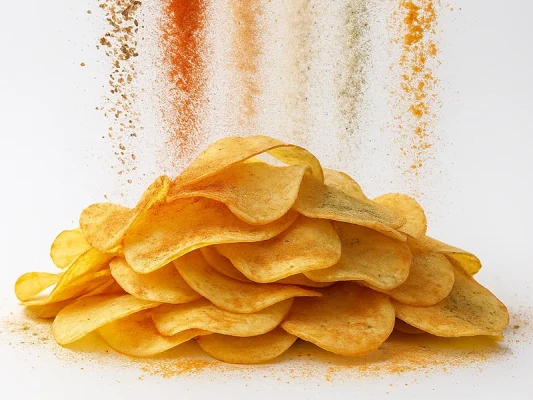
The price of snack seasoning depends on several factors. Formulation complexity, flavor innovation, customization requirements, and the raw materials used in seasoning production all influence the final price of snack seasoning powder.
However, before considering these factors, snack manufacturers and R&D managers should focus on selecting an experienced and reliable snack seasoning supplier.
The right supplier should provide technical support throughout the entire process, from formulation development to industrial production, ensuring that the final seasoning meets the product’s technical and commercial requirements.
At Saziba, we believe that successful snack development begins with the right technical partnership.
Contact Saziba before starting your next snack development project. Our experienced team is ready to support you at every stage, from seasoning formulation and product development to bulk snack seasoning supply, acting as a reliable business partner throughout the process.