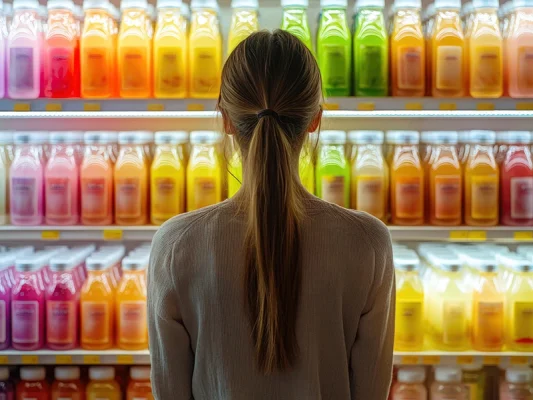
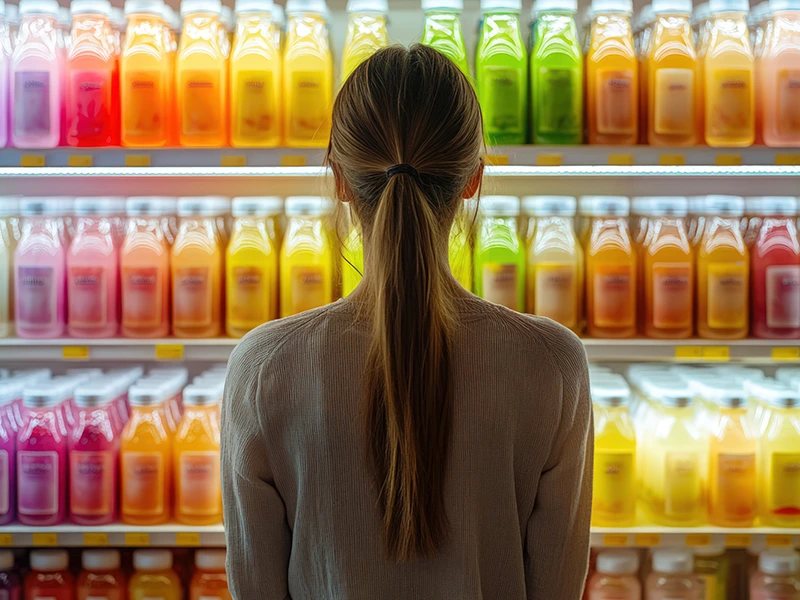
In today’s highly competitive food industry, a customer’s first interaction with a product occurs not through taste or smell, but through sight. High-quality natural colors or appealing synthetic colors serve as the primary visual language that a product’s packaging speaks to consumers on retail shelves. Any alteration, fading, or deviation from standard specifications during a product’s shelf-life can create an impression of staleness, inferior quality, or potential health concerns in the consumer’s mind.
Recently, the analytical news outlet Eghtesad Sabz Online published an article titled “The Multi-Billion Dollar Fading on Retail Shelves,” providing a diagnostic evaluation of this issue’s economic dimension. The report highlights how neglecting the stability and sanitary grade of food colors—along with failing to balance visual appeal with consumer health—can lead to severe financial losses, product recalls, and a substantial drop in market share for major manufacturers.
This article explores the technical aspects of color stability, outlines reliable strategies for maintaining safety and color performance in food processing, and emphasizes the importance of sourcing natural or synthetic food colors from reputable, certified suppliers.
The Psychology of Natural and Synthetic Food Colors & Their Direct Impact on Sales
A food product’s color is far more than a simple aesthetic attribute; it signals flavor expectations, freshness, nutritional value, and processing quality. Marketing research indicates that over 70% of impulse buying decisions at the shelf are driven by a product’s visual attributes.
When a brand experiences color degradation during a product’s shelf-life due to sub-standard or low-grade colorants, it suffers irreparable damage to its brand image. As highlighted in the Eghtesad Sabz Online report, recovering from this visual fading and regaining consumer trust incurs costs far higher than the initial investment in high-grade food colorants.
Why Do Food Colorants Require High Stability?
Both natural and synthetic food colors are exposed to multiple degrading stressors throughout food manufacturing and distribution:
- Extreme Thermal Processing: High temperatures during baking, pasteurization, and sterilization.
- pH Fluctuations: Acidic or alkaline environments in beverages, dairy items, and confectionery.
- Light Exposure and Oxidation: Chemical reactions triggered by ambient lighting and oxygen during shelf storage.
Using sub-standard colorants leads to instability and fading under these conditions. In some cases, low-quality colors can react with other ingredients, altering the final product’s flavor or texture. Evaluating pigment stability and selecting international pharmaceutical- and food-grade colors are essential steps in product engineering.
Public Health: The Fine Line Between Visual Appeal and Ethical Responsibility
Beyond commercial success, strict compliance with national and international standards regarding natural and synthetic food colorants is both an ethical and legal obligation. Using impure, unapproved, or industrial-grade colorants to reduce costs poses health risks to consumers and exposes manufacturers to legal liabilities and facility shutdowns.
Protecting public health requires food manufacturers to source raw materials from fully certified supply chains that hold Food and Drug Administration (FDA) approvals and adhere to strict quality control protocols.
Specialized Supply of Neelikon Food Colors by Saziba
Understanding the technical challenges manufacturers face in maintaining color stability and safety, Saziba provides scientific, standardized additive solutions. As an official representative of Neelikon, one of the world’s leading manufacturers of synthetic and natural food colors, Saziba supplies these essential raw materials in full alignment with global standards.
Competitive Advantages of Neelikon Food Colors Supplied by Saziba:
- Guaranteed Purity and Safety: Fully compliant with international FDA and EFSA standards, holding official import and health permits from the Food and Drug Administration of Iran.
- Exceptional Stability: Outstanding resistance to heat, light, and varying pH levels, ensuring color integrity from production to the end of the product’s shelf-life.
- Extensive Color Palette: Complete coverage of shade requirements across beverages, confectionery, meat processing, dairy, and pharmaceuticals.
Saziba: Your Strategic Partner in R&D and Product Development
At Saziba, our focus extends beyond raw material supply; we act as a strategic business partner supporting your product development roadmap. Saziba’s technical and laboratory specialists work directly alongside food industry R&D teams at every stage—from selecting the optimal pigment and determining precise dosage to refining overall formulations.
With reliable supply chains, consistent quality control, and specialized technical consulting from Saziba, you can protect your products against shelf-fading and confidently expand your market share.
For technical consultations, Certificate of Analysis (COA) requests, or laboratory samples, contact the Food Additives Division at Saziba.