Flavor is one of the most important factors influencing the success, popularity, and consumer acceptance of a food product. This is why flavorings play a vital role in food and beverage products. They enable manufacturers to intentionally design sensory profiles, differentiate their products, and maintain consistency and uniformity in the overall flavor experience.
In simple terms, flavorings are substances added to food or beverages to create, enhance, or modify their taste and aroma. They are important tools in food and beverage product development, allowing manufacturers to develop specific and distinctive flavor profiles for different products. The wide variety of foods and beverages available today is, to a significant extent, made possible through the use of flavoring systems.Read our page in Flavors.
Depending on their formulation, flavorings may contain flavoring components along with carriers, solvents, or other ingredients that facilitate their handling, incorporation, and application in food products. The exact composition varies depending on the type of flavoring and its intended application.
Types of Food Flavorings
As a general classification, food flavorings can be categorized into:
- Natural flavorings
- Artificial flavorings
It is important to note that other classifications, such as liquid, powder, fruit, and meat flavorings, describe characteristics or applications of flavorings rather than necessarily representing separate regulatory categories.
What Are Natural Flavorings?
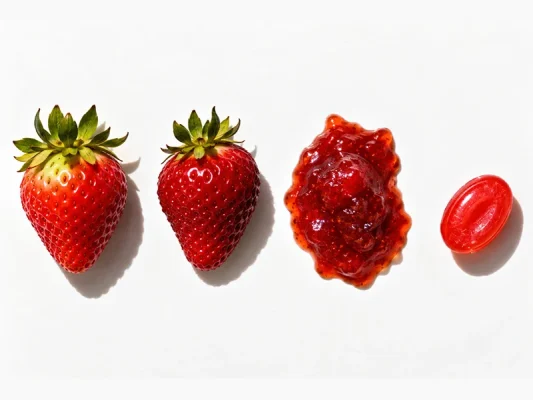
The term natural flavor has specific regulatory meanings that vary between jurisdictions. For example, under U.S. FDA regulations, natural flavor includes flavoring constituents derived from sources such as spices, fruits and fruit juices, vegetables, herbs, meat, seafood, poultry, eggs, dairy products, and fermentation products. These constituents may be obtained through processes such as extraction, distillation, enzymolysis, roasting, or heating.
In the European Union, natural flavoring substances are defined based on their source and the processes used to obtain them. EU regulations recognize flavorings derived from plant, animal, or microbiological materials through appropriate physical, enzymatic, or microbiological processes.
Natural flavorings are widely used across food and beverage categories, including carbonated beverages, protein shakes, baked goods, dairy products, snacks, confectionery, and many other products.
Consumer interest in recognizable ingredients and natural-origin products has also increased attention toward natural flavoring solutions in food and beverage development. However, the terms natural and clean label are not necessarily interchangeable, and their use is subject to the requirements of the relevant market and labeling regulations.
What Are Natural Flavorings Made From?
Depending on the applicable regulatory framework and formulation, natural flavoring components may be derived from sources such as:
- Fruits
- Fruit juices
- Vegetables
- Herbs
- Spices
- Roots and leaves
- Dairy products
- Meat and poultry
- Seafood
- Fermentation products
Natural flavorings may be used to replace flavor lost during processing, improve flavor consistency, or create distinctive sensory experiences.
Their application can be particularly valuable when manufacturers need to reproduce a specific flavor profile while maintaining consistency throughout production. Whether a product can be described or marketed as natural or clean label depends on its formulation and the regulations applicable to the target market.
What Are Artificial Flavorings?
Artificial flavorings are flavoring substances that do not meet the regulatory definition of natural flavorings in the relevant jurisdiction. Under U.S. FDA regulations, for example, an artificial flavor is a substance used to impart flavor that is not derived from the natural source materials specified in the regulation, such as fruits, vegetables, herbs, spices, meat, seafood, poultry, eggs, dairy products, or fermentation products.
Artificial flavorings can be formulated from defined flavoring substances to create, reproduce, or modify specific sensory profiles. They are widely used in food and beverage applications where manufacturers require a particular flavor profile, consistency, stability, or formulation flexibility.
It is important to note that the regulatory term artificial refers to the source and regulatory classification of the flavoring; it does not, by itself, indicate that the ingredient is unsafe.
Why Are Artificial Flavorings Used?
Artificial flavorings can be used for a variety of technical and formulation purposes, including:
- Maintaining flavor consistency from batch to batch
- Replacing or compensating for flavor changes caused by processing
- Developing specific sensory profiles
- Supporting product stability
- Reproducing flavor profiles that may be difficult to obtain consistently from natural sources
- Developing cost-effective flavoring systems, depending on the application
They are widely used in products such as snacks, beverages, baked goods, confectionery, cereals, sauces, frozen foods, and other processed food products.
What Is the Main Difference Between Natural and Artificial Flavorings?
The main distinction between natural and artificial flavorings is generally related to the source and regulatory classification of the flavoring components.
| Natural Flavorings | Artificial Flavorings |
|---|---|
| Derived from natural source materials under the applicable regulatory definition | Do not meet the applicable regulatory definition of natural flavor |
| May be obtained from plant, animal, or microbiological sources, depending on the regulation | May consist of defined flavoring substances produced through chemical or other controlled processes |
| Production may involve extraction, distillation, enzymatic, microbiological, thermal, or other permitted processes | Production and formulation are based on the specific flavoring substances and their intended sensory function |
| Often selected when a formulation requires a natural-origin flavoring profile | Often selected when specific flavor consistency, stability, availability, or formulation flexibility is required |
The specific requirements for the use and labeling of natural and artificial flavorings vary by market. For example, FDA regulations provide specific definitions and labeling requirements for natural and artificial flavors, while EU regulations establish their own definitions and conditions for using the term natural.
What Are Blended Flavors?
Blended flavors, also known as flavor blends, are flavoring formulations made by combining two or more flavoring substances, flavoring preparations, or other flavoring components to create a specific and balanced sensory profile.
Depending on their formulation, these blends may contain natural components, artificial components, or a combination of both. They can be developed to create more complex flavor profiles, improve consistency, enhance stability, or achieve specific sensory characteristics in food and beverage products.
It is important to understand that blended flavor is primarily a description of the formulation or structure of a flavoring system rather than necessarily a separate regulatory category alongside natural and artificial flavorings.
How Are Blended Flavors Different From Natural and Artificial Flavorings?
Natural and artificial flavorings generally describe the source and regulatory classification of flavoring components, whereas blended flavors describe the way multiple flavoring components are combined to create a specific flavor profile.
For example, combining two natural flavoring components can result in a flavor blend that may still qualify as a natural flavoring under the applicable regulatory requirements. On the other hand, combining natural and artificial flavoring components creates a blend containing both types of components, but the presence of a natural component alone does not make the final product a natural flavoring.
Therefore, blended flavoring primarily describes the formulation and composition of a flavoring system, while natural and artificial describe the nature and regulatory classification of its flavoring components. EU regulations, for example, explicitly recognize mixtures of different categories of flavorings and establish specific conditions for the use of the term natural.
What Are Liquid Flavorings?
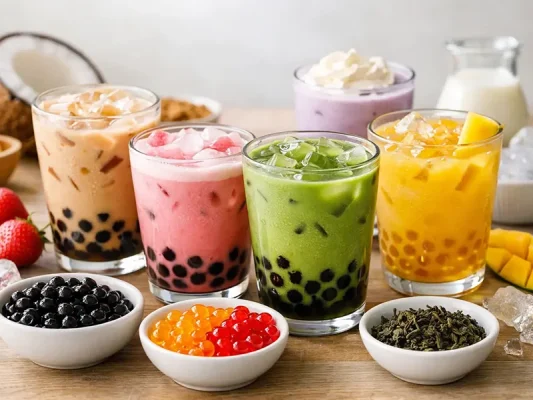
Liquid flavorings are concentrated flavoring formulations supplied in liquid form. Depending on their composition and application, flavoring components may be dissolved, dispersed, or emulsified in a suitable carrier system.
Liquid flavorings can be used to add, enhance, or reproduce specific flavors in food and beverage products. Their liquid format can allow efficient and uniform incorporation during production, making them suitable for a wide range of applications, including ready-to-drink beverages, dairy products, liquid nutritional products, sauces, and other liquid or semi-liquid food systems.
Liquid flavorings may be formulated as water-soluble, oil-soluble, or emulsion-based systems, depending on the product matrix, processing conditions, and desired sensory performance.
What Are Powdered Flavorings?
Powdered flavorings are flavoring formulations supplied in a dry, powder form rather than as a liquid. They are particularly useful for products in which maintaining a dry formulation is important or where the use of a liquid flavoring is technically unsuitable.
Powdered flavorings can be designed for a wide range of dry food applications and instant formulations. For example, food manufacturers may use powdered flavorings in electrolyte powders, protein powders, instant beverage mixes, dry premixes, snacks, and other powdered food products.
The choice between liquid and powdered flavoring depends on factors such as product formulation, processing conditions, storage requirements, flavor release, and the desired sensory profile.
What Are Fruit Flavorings?
Fruit flavorings are flavoring systems designed to create, enhance, or reproduce the sensory characteristics associated with fruits in food and beverage products.
Depending on their formulation, fruit flavorings may be based on natural materials obtained from fruits or other botanical sources, or on flavoring substances designed to produce a specific fruit profile. Under the FDA definition, natural flavors may include essential oils, oleoresins, essences, extracts, distillates, and other products containing flavoring constituents derived from sources such as fruits and fruit juices.
Fruit flavorings can be formulated to create a wide range of sensory profiles, including strawberry, orange, lemon, apple, sour cherry, peach, mango, and various berry flavors.
They are widely used in products such as beverages, dairy products, ice cream, confectionery, chocolate, desserts, and powdered food products.
Under EU regulations, flavorings can consist of different categories of flavoring substances and preparations, including natural flavoring substances and mixtures of flavorings, and are used to impart or modify the odor and/or taste of food.
What Are Meat Flavorings?
Meat flavorings are flavoring systems designed to create, enhance, or reproduce sensory characteristics associated with meat in food products.
Meat flavor is the result of interactions among a wide range of compounds. Factors such as umami-related compounds, fats, and volatile compounds contribute to the final taste and aroma profile. During cooking and heat processing, reactions such as the Maillard reaction also generate compounds that contribute to characteristic cooked and roasted meat flavors.
Depending on their formulation and intended application, meat flavorings can be developed to create profiles such as beef, chicken, kebab, grilled meat, bacon, roasted meat, and cooked meat.
They can be used in products such as processed meat products, sausages, cold cuts, snacks, soups, sauces, ready meals, and other savory food products.
From a technical and regulatory perspective, flavorings may contain natural, artificial, or blended components. For example, under U.S. FDA regulations, meat, seafood, and poultry can be sources of natural flavor, while specific labeling requirements apply when a flavor contains both natural and artificial flavor components.
What Is a Permitted Food Flavoring?

A permitted food flavoring is a flavoring substance or formulation that can be used in food in accordance with the applicable food safety and regulatory requirements.
Flavorings are generally used in relatively small quantities, with their primary purpose being to create, enhance, or modify the sensory characteristics of a food rather than to provide nutritional value.
Whether a flavoring is permitted depends on several factors, including the identity of the substance, its safety and purity specifications, the food category in which it is used, the intended level of use, and the regulatory requirements of the target market. Therefore, being natural or artificial alone does not determine whether a flavoring is permitted.
For example, EU regulations establish an approved list of flavorings and source materials, as well as conditions of use and labeling requirements.
What Are Food Extracts?
Food extracts are ingredients obtained by extracting specific compounds from natural sources such as fruits, plants, spices, seeds, and other food materials.
During extraction, compounds responsible for characteristics such as flavor, aroma, color, or other sensory properties can be separated and concentrated using an appropriate extraction process. Depending on the raw material and extraction method, an extract may be produced in liquid, powdered, or concentrated form.
Food extracts are used in a wide range of applications, including beverages, dairy products, confectionery, chocolate, sauces, bakery products, and other food products.
For example, botanical and spice extracts can contribute to the aroma and flavor profile of a finished product. The technical characteristics, safety, and conditions of use of each extract depend on its source material, extraction method, composition, and intended application.
Where an extract falls within a regulated category of food ingredients or flavorings, its use must comply with the applicable requirements and permitted conditions for the relevant substance and food category.
Consult Our Flavor Experts to Choose the Right Flavoring for Your Product
Looking for the right natural, artificial, blended, liquid, or powdered flavoring for your product?
Share your product specifications, application, and desired sensory profile with our experts. Our team can evaluate your requirements and recommend a suitable flavor profile and flavoring solution for your specific food or beverage application.